
The debate over “agentic shopping”, where artificial intelligence autonomously assists or even completes purchases for consumers, has long dominated tech and e-commerce strategy circles. Some argue it’s still theoretical, others warn about privacy and complexity. But Amazon’s AI shopping assistant, Rufus, is proving that AI commerce isn’t a future concept, it’s happening today.
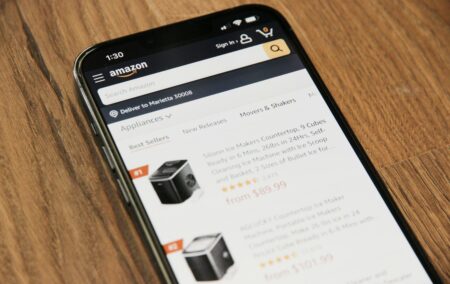 Unlike the pure agentic assistants that autonomously order on behalf of users, Rufus doesn’t make purchases without customer approval, yet. But it does reshape how people find products, make decisions, and complete purchases inside the Amazon marketplace.
Rufus Driving Real Results
Amazon’s Rufus is built into the Amazon Shopping app and website as a conversational AI assistant. It answers customer questions, recommends products, compares alternatives, and speeds up purchase decisions by tailoring guidance to individual needs.
The early data on Rufus suggests that it is already driving measurable business results:
- Double the purchase sessions: On Black Friday 2025, Amazon shopping sessions that included Rufus nearly doubled (100% increase) compared with a typical period, far outpacing sessions without Rufus.
- Higher conversion rates: Customers interacting with Rufus are significantly more likely to complete a purchase than those who don’t.
- Massive user adoption: Amazon reports hundreds of millions of monthly interactions with the assistant and foresees billions of dollars in incremental sales attributable to its influence.
While the industry debates the definition and long-term impact of “agentic” AI, Rufus is already shaping buying behavior at scale.
What Makes Rufus Different from Traditional Search
Before Rufus, Amazon’s shopping experience relied on search keywords, recommendations based on browsing history, and user filters. Rufus changes that by:
- Understanding conversational intent: Customers can ask natural language questions like “What should I consider when buying a portable grill?” or “Is this jacket good in heavy rain?” and get context-aware responses.
- Providing real-time comparisons: Instead of manually reading multiple listings, customers get synthesized perspectives and alternatives.
- Keeping continuity: Rufus retains context across questions, leading shoppers gracefully from browsing to decision.
In essence, Rufus curates options rather than simply listing them. Some analysts suggest this is shifting Amazon’s “digital shop window” away from purely keyword-based search toward a more conversational, relevance-oriented filtering system, and brands are noticing.
Marketing to Amazon’s AI: What Brands Should Do
If AI agents like Rufus increasingly mediate purchase decisions, brands need to think differently about visibility and conversion. Here are strategic ways to optimize for this AI-driven shopping era:
Treat the AI as a Primary Audience
Instead of optimizing solely for humans (keywords, labels, images), make sure listings are AI-friendly:
- Write clear product descriptions with natural language that answers common customer questions.
- Include rich, structured data, sizes, specs, and materials, that AI systems can parse easily.
- Anticipate what questions an AI might be asked about your product.
AI systems like Rufus don’t just match keywords. They infer intent and context; so your content should help an AI confidently answer queries in an authoritative way.
Focus on Reviews and Social Proof
AI relies heavily on signals like ratings, reviews, and Q&A content to judge quality and relevance. Strong, positive, and detailed reviews, especially when they mention use cases and features, help AI recommend your products more often.
If your best-selling item has 4-plus-star reviews with solid text, Rufus will treat it as a safer recommendation than one with fewer or weaker reviews.
Structure Listings for Conversational Clarity
Rufus answers questions by comparing features and advantages. Listings that explicitly state benefits in natural phrases (like “great for small kitchens” or “durable water-resistant shell”) give AI clear hooks to work from.
Think of your Amazon product page as a script that an AI assistant will read aloud to customers.
Embrace Agentic Features Where Possible
Some Amazon AI features (like auto-buy or price alerts) let users delegate tasks to the system based on preferences. Encouraging adoption of these features for your products, for example through price-based promotions, alerts, and Prime offers, increases the chances your product becomes part of an AI-driven conversion.
The Future: AI as Shopping Navigator, Not Just Search
Rufus and similar systems won’t eliminate human choice, but they reshape how decisions are made. For marketers and brands, this means:
- Visibility is no longer just about SERP ranking.
- AI relevance signals, content clarity, product data quality, and review depth may become the new currency.
- Brand narratives and product value propositions will increasingly be filtered through AI interpretations before reaching the customer.
In short: to succeed in tomorrow’s market, you must make your product AI-ready. Not just searchable, but AI-recommendable.